The World's Largest Battery Will Run on Rust. Here Is How Iron-Air Storage Works
A battery built from iron, water, and air can hold its charge for 100 hours, not four. It is cheap, it is heavy, and it is about to become the biggest grid battery on the planet.
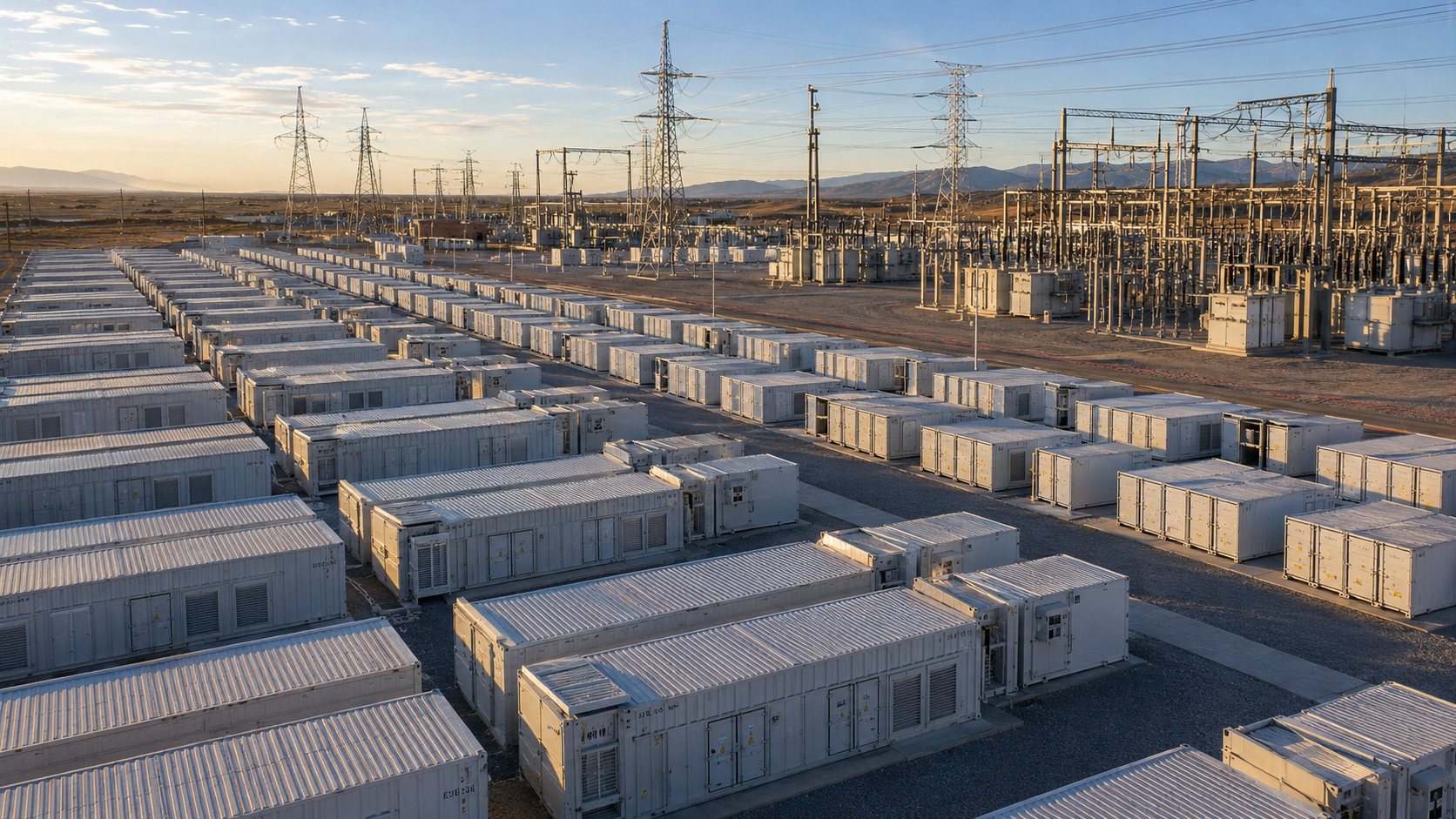
Grid-scale storage is moving from hours of backup to days. Illustration: Watts & Wild.
In February 2026, Google and the utility Xcel Energy announced plans for a single battery in Minnesota rated at 300 megawatts and 30 gigawatt-hours. If those numbers do not mean much yet, this one will: it would be the largest grid battery in the world by the amount of energy it can store, and it is meant to keep a data center running through days of bad weather.
The surprising part is what is inside it. Not the lithium that powers phones and electric cars. The active ingredient is iron, and the battery works by letting that iron rust on purpose.
A battery that breathes
The technology is called iron-air, and the company behind this wave of projects is Form Energy. The chemistry is almost comically simple compared with lithium-ion. When the battery discharges, iron is exposed to oxygen from the air and rusts, the same reaction that eats away an old gate. That controlled rusting releases electrons, which is the current you use. When the battery charges, electricity reverses the reaction, turning the rust back into metallic iron and releasing the oxygen again.
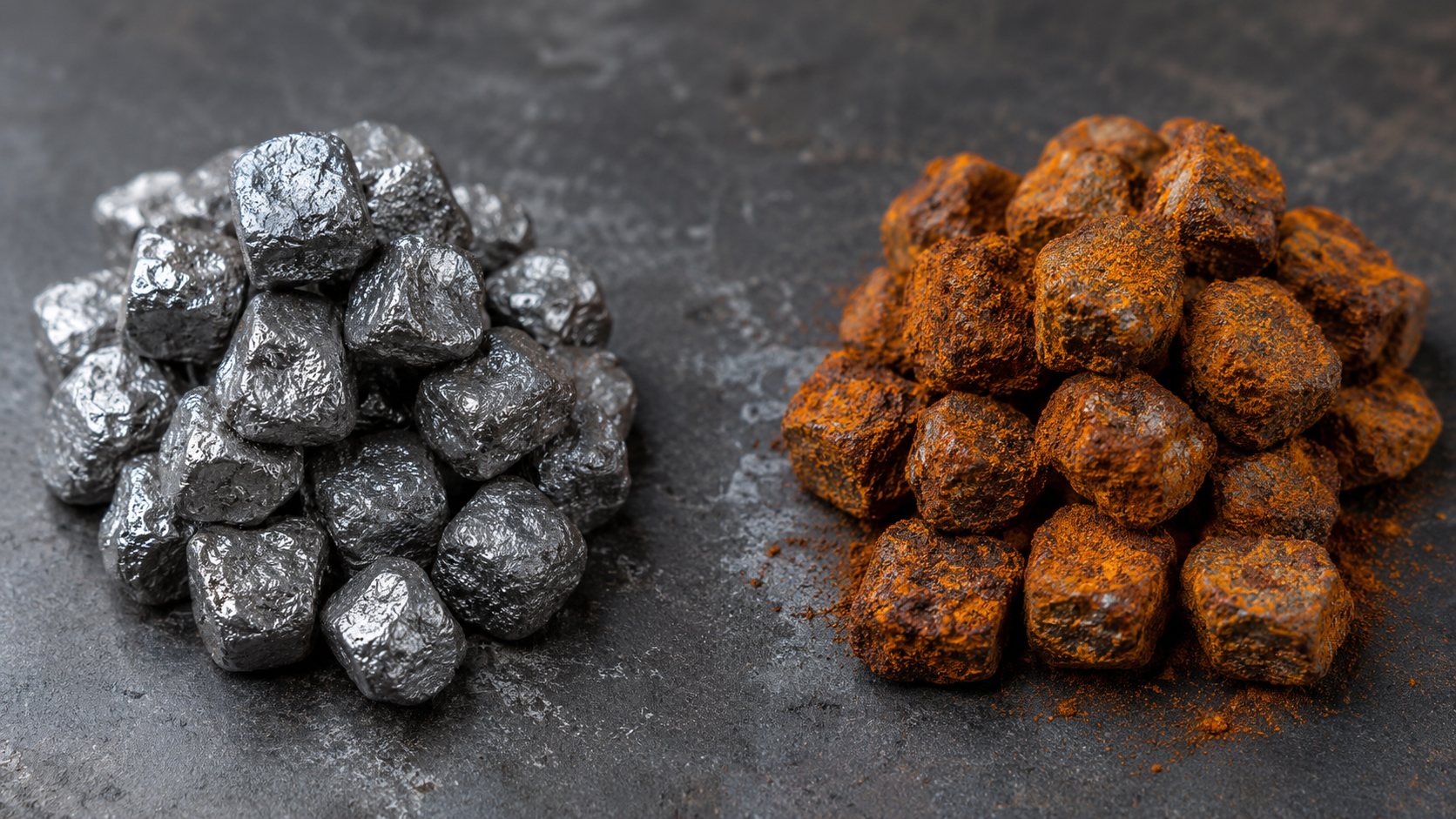
Engineers sometimes call it a breathing battery, because it pulls in oxygen to discharge and pushes it back out to charge. The ingredients are iron, water, and air, three of the cheapest and most abundant materials on Earth. That is the whole pitch.
Why 100 hours changes the game
Most grid batteries today use lithium-ion, and they are built to run for about four hours. That is enough to smooth out the evening demand peak, but not enough to carry a city through a windless, cloudy stretch that lasts days. Iron-air is built for exactly that gap. Form Energy designs its system to store and release energy for up to 100 hours, more than four full days.
It is also cheap where it counts. The company targets a system cost near 20 dollars per kilowatt-hour of storage, a fraction of what lithium-ion costs for the same energy. A pilot going live in California in early 2026, backed by a 30 million dollar state grant, is rated to hold 150 megawatt-hours, enough to power roughly 1,500 homes for four days.
The honest catch
None of this makes iron-air a lithium killer, and it is important to be clear about that. The same chemistry that makes it cheap also makes it slow and inefficient. Its round-trip efficiency is lower than lithium-ion, so more of the energy is lost between charging and discharging. It is heavy, it takes up a lot of space, and it cannot deliver a fast burst of power. You will never see an iron-air battery in a phone or a car.
What it does, it does in a niche nothing else fills well: storing huge amounts of energy for a long time, cheaply, when speed does not matter. On a grid that runs more and more on wind and sun, that long, slow, patient storage is the missing piece.
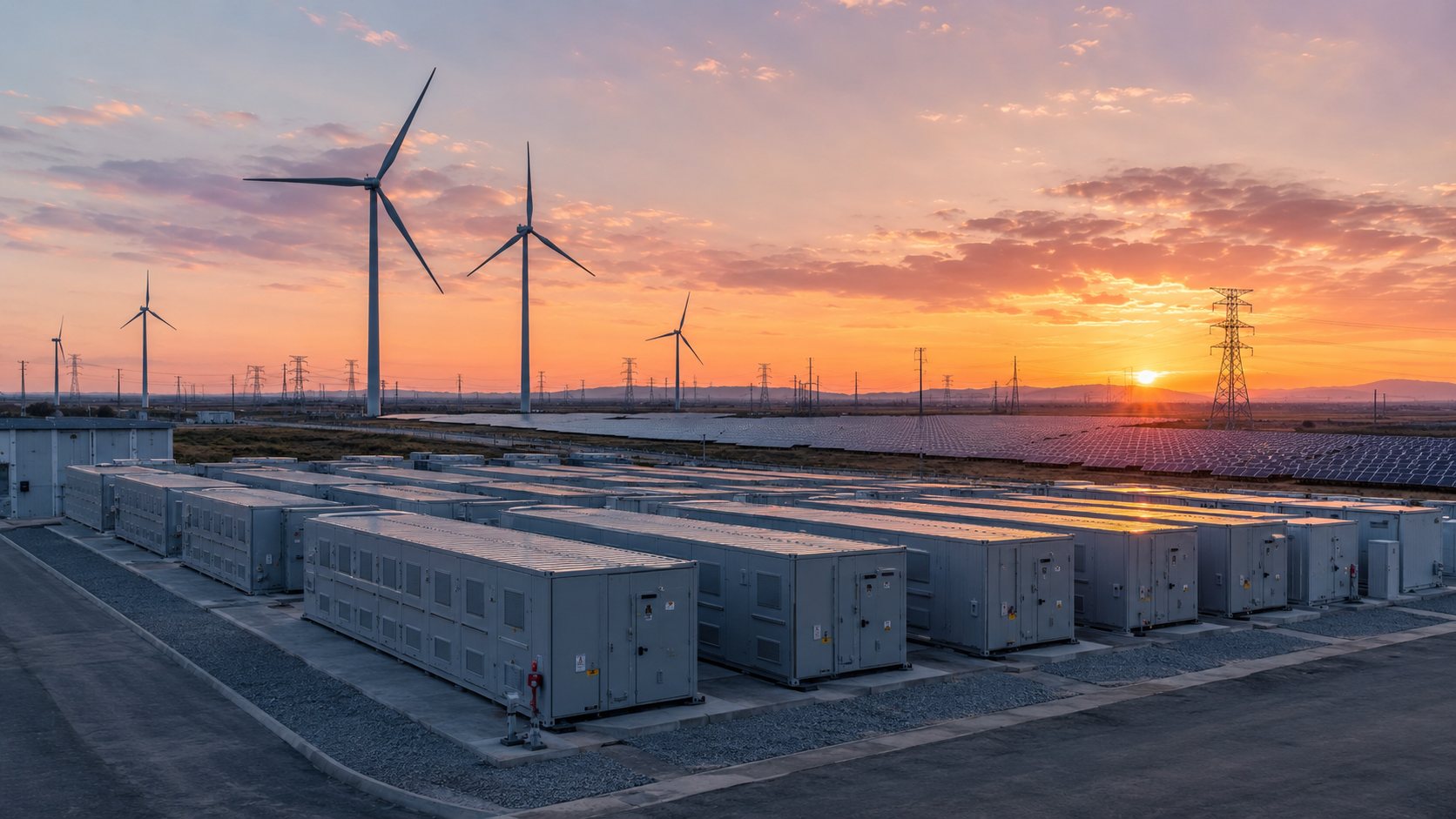
Where it is being built
This is no longer a lab experiment. Form Energy is producing the batteries at a high-volume factory in Weirton, West Virginia, on the site of a former steel mill. Its first commercial project, with Great River Energy in Minnesota, is due online in 2026. The company says it has more than 75 gigawatt-hours of projects under agreement, and in March 2026 it signed a deal to supply 12 gigawatt-hours of storage to the data center firm Crusoe for artificial intelligence sites starting in 2027.
That last detail is the quiet theme tying it together. The hunger for electricity from AI data centers is so large that the companies building them are now reaching for a century-old idea, rust, to keep the lights on.
Sources: Form Energy; Utility Dive; pv magazine USA; Latitude Media; Great River Energy.
Related reading: inside the world's largest solar farm, where 20,000 sheep keep the grass down.